Norman L. Markworth
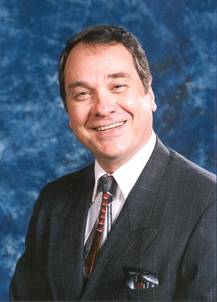
Regents’ Professor of Astronomy
Director of the SFASU Observatory

Education and Experience
I received my B.S. in Physics from the University
of Illinois at Champaign-Urbana. Knowing I wanted to do astronomy and not
wanting to freeze to death, I did my Ph.D. work at the University of Florida in
I came to Stephen F. Austin in the Autumn of 1978
after spending one year at
Research Interests
My dissertation research was in the field of close binary star dynamics. Most of my telescope time is still devoted to the photometry of close binary star systems. Analyzing the light variations of the stars as they orbit will yield a wide array of astrophysical and geometrical parameters for the star system. My current interest is in modeling peculiar spotted stars that occur in close binary star systems.
My second research field is the computer control of telescopes and telescope instrumentation. This effort started modestly enough when we were collimating the 18-inch telescope at the SFASU Observatory in 1979. The old tracking motor refused to work, I had a graduate student needing observations, and a replacement motor would take nine months to deliver. Using a spare $25 stepping motor and about $5 in electrical components, we were back in operation in one month.
Today the SFASU Observatory boasts two highly automated telescopes devoted to photometry. The 18-inch telescope found its first use in the South Pacific, helping to locate lunar landing sites prior to NASA's Apollo program. It is equipped with a Photometrics, Ltd. Star 1 CCD camera attached to a CompuScope computer controlled filter wheel to provide CCD Photometry. I wrote the operating system which controls both the photometer and the telescope.
Along with Bruce Rafert
(now at
Courses
- SFA 101 - Freshman Seminar
- AST 105 - Introductory Desciptive Astronomy
- PHY 101 - General Physics I
- PHY 108 - Intro to Engineering/Physics
- PHY 118 – Musical Acoustics
- PHY 333 - Modern Physics
- AST 305 - Observational Techniques
- AST 335 - Astrophysics
- PHY 441 - Optics
- PHY 512 - Atomic Structure
- PHY 532 - Classical Electrodynamics


